
An AI calling agent sounds like science fiction until you hear one work. It answers the phone in a natural voice, understands what the caller wants, books the appointment, and writes up the call afterwards. No ringing out. No voicemail nobody checks.
It’s also the piece of AI that makes business owners most nervous. Fair enough. The phone feels personal. A bad automated call annoys people in a way a bad web page never will, and most of us have suffered through an old-style phone menu that made us press 1, then 4, then scream into the handset.
Modern voice AI is a different thing from those menus. This post explains how an AI calling agent actually works, in plain English. We’ll cover inbound and outbound calls, what it costs in typical ranges, and — just as important — where a human is still the better choice.
An AI calling agent is software that answers or makes phone calls using a realistic AI voice. It listens to the caller, understands the request, and takes action: booking appointments, sending reminders, answering common questions, or qualifying leads. It works alongside your team and passes calls to a human whenever a conversation needs one.
How an AI calling agent works, in plain English
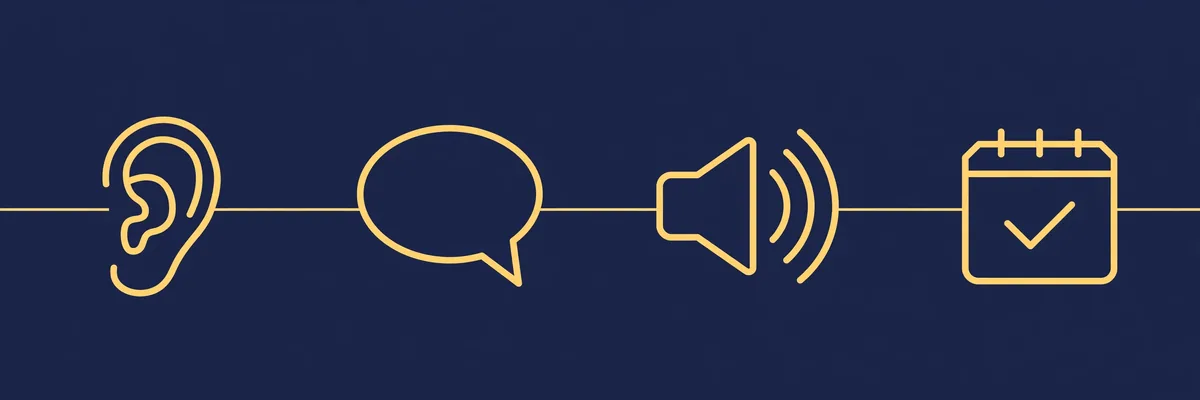
Strip away the jargon and four things happen on every call.
First, it listens. The caller’s speech is turned into text in real time. Modern systems cope well with accents, background noise, and people who talk fast. Not perfectly — we’ll get to limits — but well enough for everyday business calls.
Second, it understands. An AI language model works out what the caller actually wants. “I need someone to look at my boiler, it’s making a noise” is a booking request, even though nobody said the word “booking.” The model also remembers the conversation, so if the caller gave their name at the start, the agent uses it later.
Third, it speaks. The reply is turned back into speech with a natural-sounding voice. You choose the voice and the tone — friendly, formal, local accent where available. It can be interrupted mid-sentence, and it adjusts, like a real conversation.
Fourth, it acts. This is the part that makes it useful rather than a novelty. The agent connects to your calendar, your CRM, or your booking system. It checks real availability, books the slot, sends a confirmation text, and logs a summary of the call. The technology behind the voices moves fast; OpenAI’s published work on real-time voice models gives a good sense of where it stands.
None of this needs special hardware. It runs through your normal business number or a new number provided for it.
Inbound calls: the ones you currently miss
Inbound is where most small businesses start, because the problem is obvious. The phone rings while you’re with a customer, on a job, driving, or closed. The caller doesn’t leave a message. They just ring the next company.
An AI agent answers those calls on the first or second ring, every time. It handles the routine majority: booking appointments, answering price and hours questions, taking details for a quote, giving directions or delivery updates.
Think about what that means overnight and on Sundays. A caller at 9pm gets a real conversation and books a 10am slot. Your competitor’s caller gets voicemail. By Monday morning, your diary has bookings theirs doesn’t.
Every inbound call also gets logged and summarised. You see who called, what they wanted, and what was booked — without listening to recordings or chasing messages.
It also smooths out your busy periods. Most businesses don’t miss calls evenly across the week. They miss them in bursts: Monday mornings, the first warm week of spring, the day an advert runs. Hiring extra staff for those spikes makes no sense, and neither does losing the work. An agent absorbs the spike without complaint, then sits quietly when the phones calm down. That flexibility is a big part of why diary-based businesses adopt this first.

Outbound calls: reminders and follow-ups
The agent can make calls too. This is where businesses either love it or get it badly wrong, so let’s be precise about what’s appropriate.
Good outbound uses are calls people expect and benefit from. Appointment reminders: “This is a reminder about your visit tomorrow at 10 — press nothing, just tell me if that still works.” Reschedule calls when something changes. Follow-up calls to people who asked for a quote and went quiet. Recall calls for clinics and services with regular check-ups.
These calls save staff hours and cut no-shows. A human calling forty people to confirm tomorrow’s appointments is a morning gone. The agent does it in parallel and reports back who confirmed, who rescheduled, and who needs a person to call them.
Bad outbound use is cold calling strangers to sell things. Don’t. It damages your reputation, people hate it, and in many places it’s restricted by law. An AI calling agent is a service tool, not a spam machine.
This follow-up work connects closely with the wider system described in our post on how to automate lead follow-up — the phone agent is one channel in that flow, alongside texts and emails.
Lead qualification: sorting the serious from the curious
Not every enquiry deserves your best salesperson’s next hour. An AI agent can make the first call or take the first call and ask your standard qualifying questions. What do they need? Where are they based? When do they need it? What’s the rough budget or job size?
It scores or tags the lead against your rules and books the promising ones straight into your calendar. The time-wasters get a polite answer and useful information, but not your afternoon.
This works best when your qualification questions are already clear. If you can’t say what makes a lead good for your business, write that down first. The agent can only follow rules you’ve actually decided.
What an AI calling agent costs
Costs come in the same two parts as most AI tools: setup and running.
Running costs are usually charged per minute of call time. Typical platform rates sit roughly between $0.10 and $0.50 per minute, depending on the voice quality, language, and provider. A short booking call might last two minutes. So a business handling 200 short calls a month might see platform call costs somewhere in the $40 to $200 range. Busy call centres pay far more, tiny businesses far less.
Setup varies more. Connecting an agent to your calendar and CRM, training it on your services, writing its call scripts, and testing it properly — done-for-you setups for small businesses typically range from about $1,000 to $5,000. A simple reminder-calling setup sits at the low end. Multi-language, multi-location setups sit higher. Ongoing management or support plans, if you want them, are commonly a few hundred dollars a month.
These are typical market ranges, not our price list — every project is quoted on its specifics. Our broader guide to AI automation cost explains how to budget for this properly and work out payback.
The honest limits: when humans are better
Here is the part of the sales pitch most providers skip. There are calls an AI agent should not take.
Angry or upset callers. The agent should spot frustration early and transfer or take a number for an urgent callback. Letting a bot argue with an unhappy customer is a disaster.
Complex, emotional, or high-stakes conversations. Bereavement, legal trouble, medical worries, big-money negotiations. People deserve a person.
Very technical troubleshooting. If solving the problem needs real diagnosis and judgement, the agent’s job is to gather details and get them to your expert fast.
Callers who simply want a human. Some people will always prefer one. The agent should make reaching a human easy, never a maze. Hiding the human option is the fastest way to make customers hate the system — and you.
Accents and noisy environments also still trip the technology up sometimes. Test with real callers like yours before you rely on it fully.
Set up with these limits respected, an agent handles the routine 60-80% of calls and makes the human-handled remainder better, because your team gets summaries and context instead of cold calls.
Should your business use one?
The strongest case is a business that misses calls it can’t afford to miss: clinics, home services, salons, repair shops, agencies, any diary-based business. If your phone ringing out means a lost booking, an agent that answers every time changes the maths quickly.
The weakest case is a business where every call is complex and personal, or call volume is tiny. Then a website chatbot or simple callback system may serve you better for less money.
If you’d like a straight opinion on your situation, look at our AI automation services or contact us with a rough idea of your call volume. We’ll tell you whether an AI calling agent fits, what it would likely cost, and what we’d do instead if it doesn’t.
Frequently Asked Questions
Do callers know they’re talking to an AI?
They should. We set agents to introduce themselves as an automated assistant. It’s honest, it’s increasingly required by regulation in some regions, and most callers are fine with it when the call is quick and helpful.
What happens if the AI doesn’t understand a caller?
A well-built agent asks them to repeat, offers simpler options, and then transfers the call or takes a number for a callback. It should never guess through an important detail like a date, address, or price.
Can an AI calling agent really book into my calendar?
Yes. It connects to tools like Google Calendar or your booking system, checks real availability, books the slot, and sends the customer a confirmation. It also logs a summary of every call for your team.
How much call volume do I need for this to be worth it?
As a rough guide, if missed calls or reminder calls cost you a few bookings a month, it usually pays for itself. Very low call volume businesses are often better served by a chatbot or a good callback process.
Can it make sales calls to new customers?
Technically it can dial out, but we strongly recommend against cold sales calling. It’s unpopular, harms your reputation, and may break telemarketing rules. Use outbound for reminders, confirmations, and follow-ups people expect.